Connecting art, textile innovation and circular thinking
What happens when the vision of an artist meets the technical expertise of an innovative textile laboratory? This was the question at the heart of a five-day exchange that took place in Lyon from 29 June to 3 July 2026.
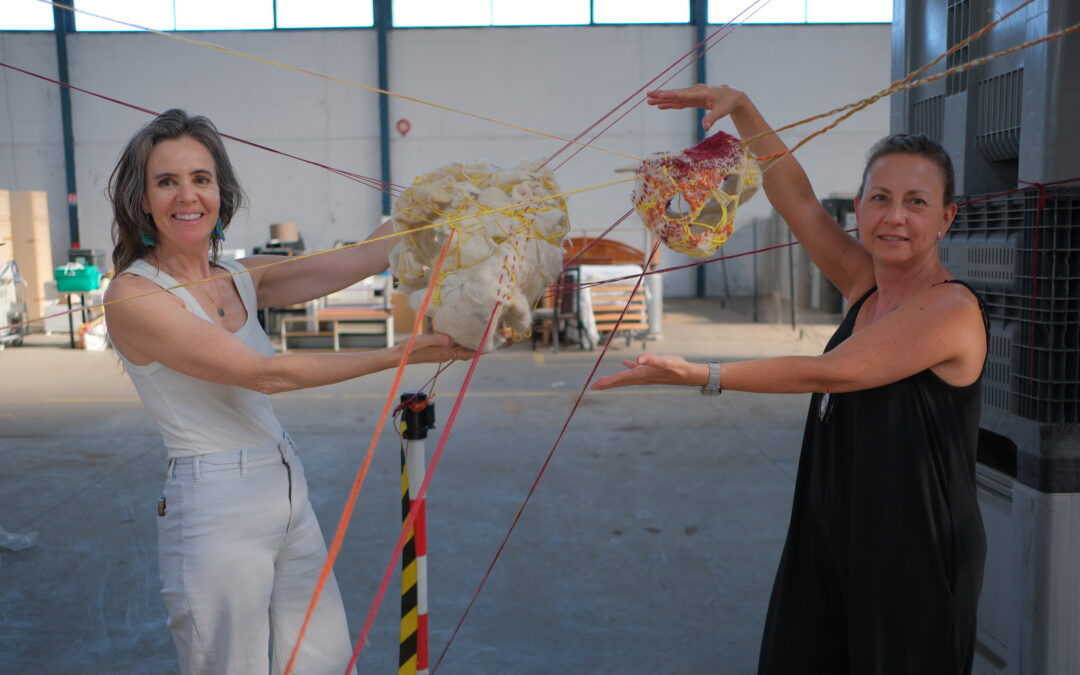
Supported by the Peer 2 Peer Programme of the European Creative Hubs Network, the project brought together Carmen Casas Úbeda and Victoria Carreras from ANDA Cowork (Granada) with Pauline Gamore, Marion Guillaud and Capucine Robert from Le Textile Lab in Lyon.
The initiative combines art, textile craftsmanship, waste and manufacturing innovation to explore how discarded materials can be transformed into new creative possibilities for a more sustainable future. Throughout the week, the participants shared knowledge on sustainable textile practices, circular design, biomaterials, natural dyes and innovative manufacturing techniques.
As Carmen reflects on the experience:
“As an artist, I can say that these were five intense days of experimenting with materials and meeting people; five days marked by a transformation in the way I see, create and connect with others.”
Chrysalis–Labyrinth: a metaphor for transformation
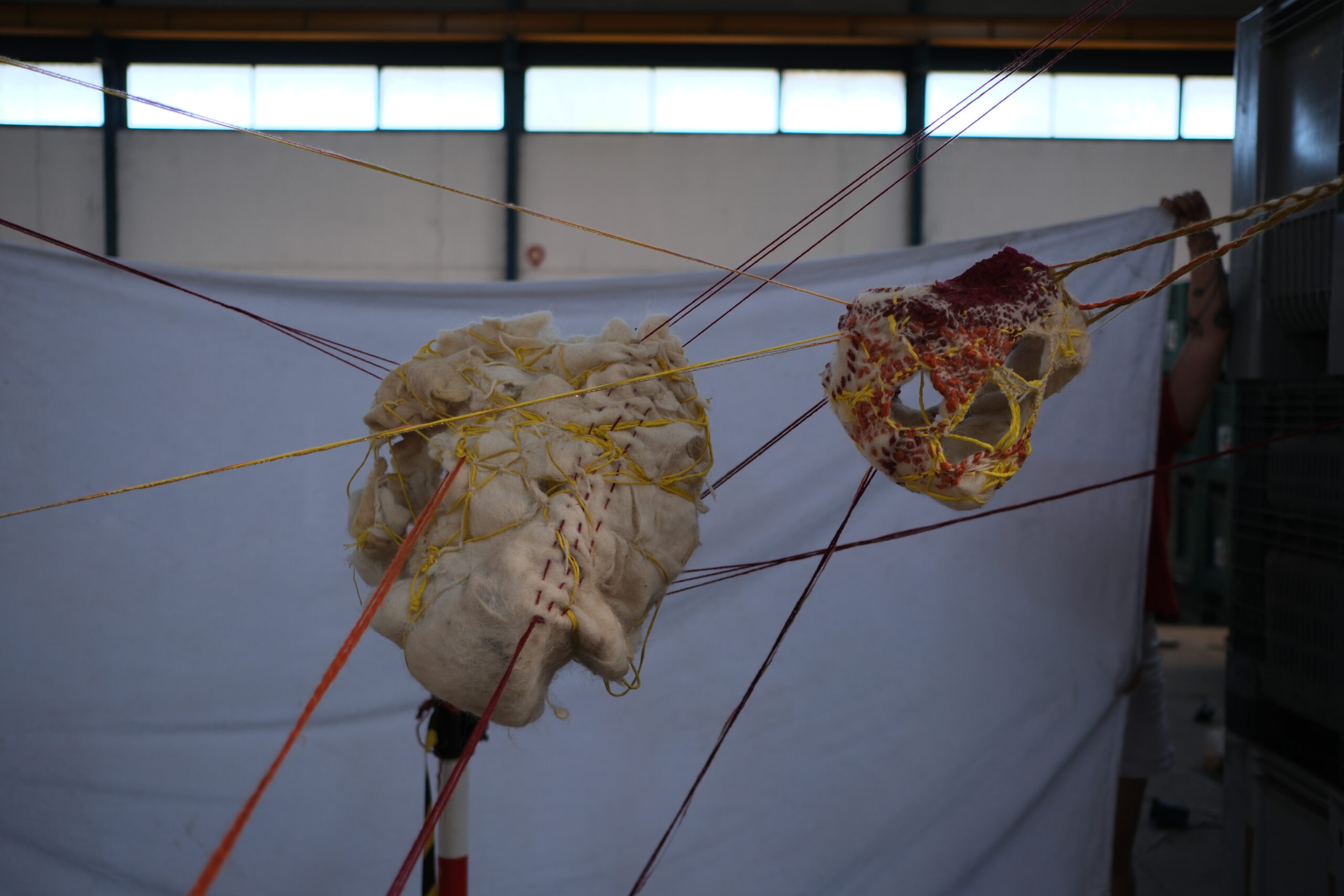
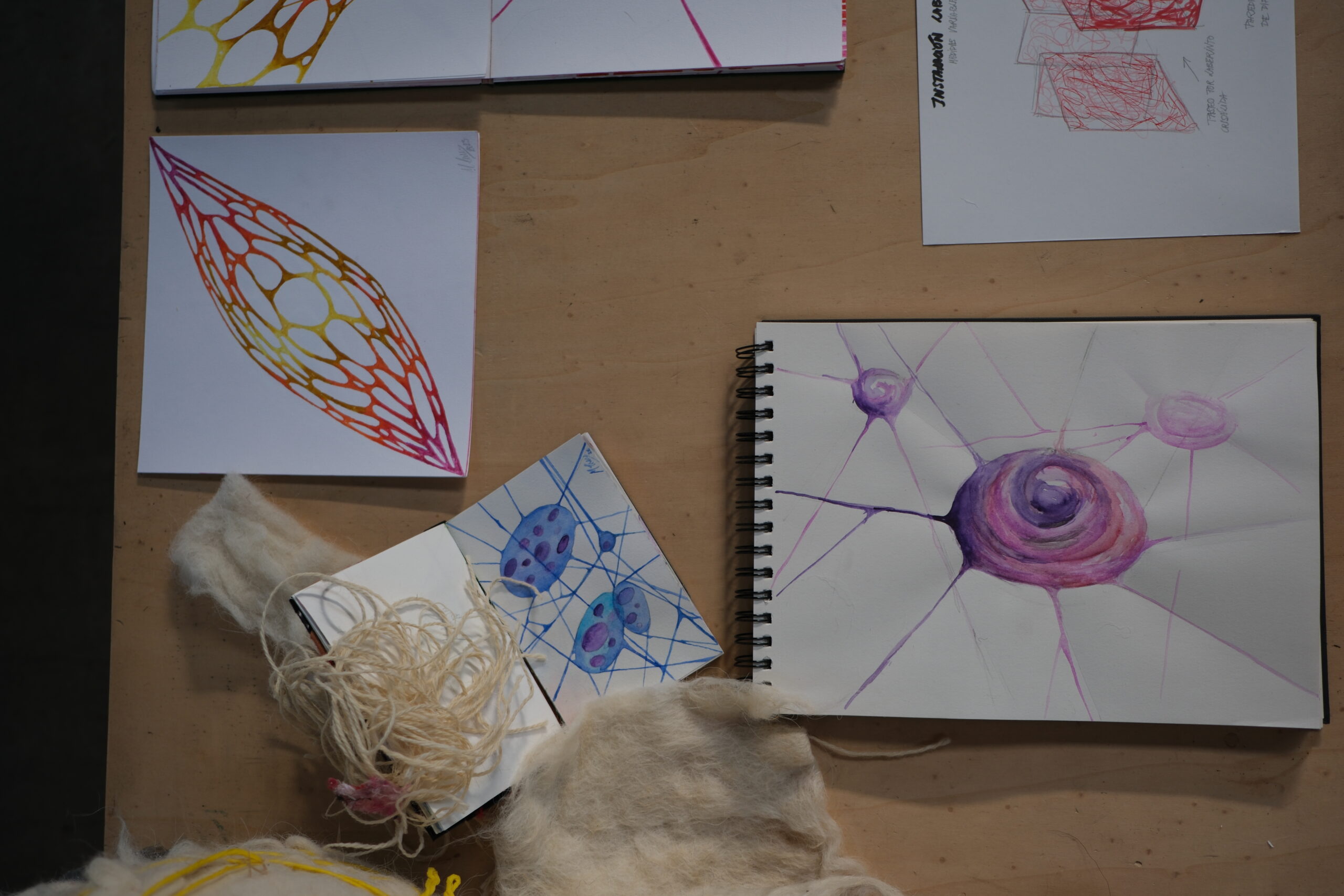
The concept of “Chrysalis–Labyrinth” provided the artistic framework for the exchange. On the one hand, the chrysalis symbolised transformation. On the other hand, the labyrinth represented the complexity of finding new paths towards a more sustainable future.
In Carmen’s words:
“The guiding thread and inspiration behind this project are the Chrysalis and the Labyrinth, both metaphors for the inner change we constantly undergo and for the silence that is necessary for this transformation to take place. They also represent the artistic metamorphosis of ideas, relationships and materials, opening up an immense range of possibilities that are still waiting to be explored and that remain sustainable for our environment.”
Five days of collaboration and experimentation
Day one: introducing the project
The programme began with a presentation of Le Textile Lab and Halle des Valoristes. This is a place where waste becomes a resource and where ecological and social regeneration go hand in hand. The artistic project was also presented, laying the foundations for the week ahead.
Day two: connecting innovation and heritage
The second day linked contemporary textile innovation with Lyon’s rich textile, cultural and social heritage. To achieve this, the participants visited Passage Thiaffait and several museums across the city.
Hands-on experimentation in the laboratory
The following days were dedicated to practical experimentation in the laboratory. Participants worked with specialised machinery and processes, including textile shredding and laser cutting.
At the same time, they exchanged knowledge on biomaterials, natural dyes and recycled materials. Thanks to this combination of traditional craftsmanship and technological innovation, new ideas and creative possibilities emerged.
Final day: exhibition and future collaborations
Finally, the last day combined further experimentation sessions with conversations about future collaborations. The exchange concluded with an exhibition and a vernissage, allowing the participants to share the results with the public.
Impact and outcomes
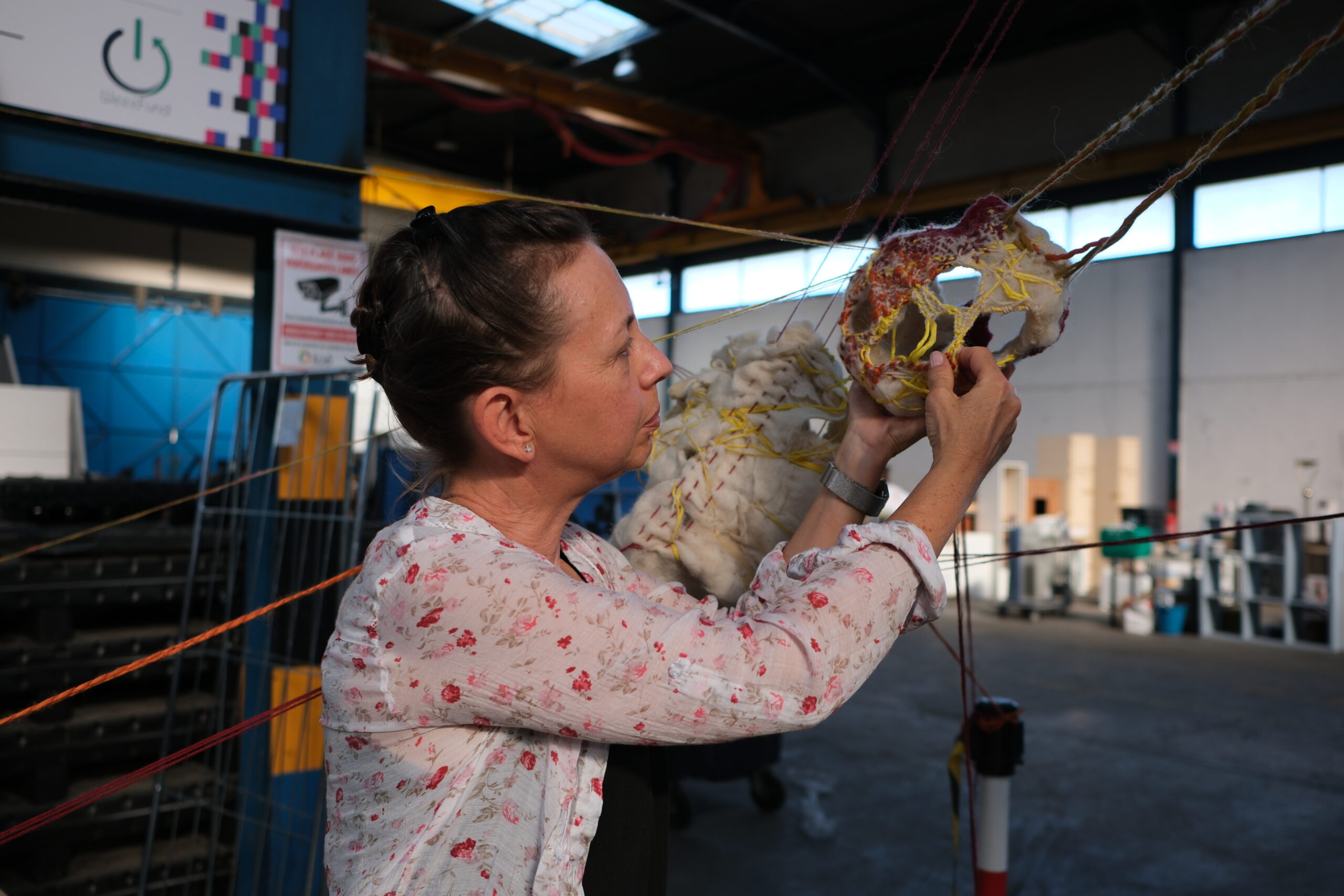
The project created a space for knowledge transfer between artistic practice, waste regeneration and responsible textile design. In addition, the participants acquired new technical skills, experimented with recycled materials and developed prototypes exploring the relationship between contemporary art, technology and sustainability.
As Carmen explains:
“Every innovation inevitably leads to transformation. It emerges when art, technique and the generosity of sharing knowledge come together. This is what we call collaboration, and it is the spirit that defines the two spaces that made this encounter and this project possible.”
Strengthening connections between Granada and Lyon
Beyond its practical outcomes, the project strengthens the ties between Granada and Lyon and opens up new opportunities for collaboration between ANDA Cowork and Le Textile Lab.
For the ANDA Cowork team, this exchange represents an exceptional opportunity to build new international connections, learn from inspiring professionals and cities, and reinforce our commitment to creativity, circular thinking, sustainability and collaboration within our community.
As Carmen concludes:
“I am taking away much more than new materials and techniques from this experience. I am leaving with a network of people who believe that transforming the world begins with transforming the way we create. Many thanks to Victoria Carreras and to everyone at Le Textile Lab for their dedication, trust in my proposal and generous collaboration in bringing it to life.”
Looking towards the future
Most importantly, LABYRINTHE – CHRYSALIDES demonstrates how creative collaboration can help us rethink the way we understand waste, materials, production processes, people, spaces and territories.
By combining traditional craftsmanship, circular thinking, new technologies and artistic storytelling, the project explores new ways of weaving a more sustainable, collaborative and conscious future.